
The portfolio tracker you use determines how much work you do at tax time. A good tracker imports your exchange history automatically, parses on-chain DeFi transactions, and produces a tax-ready report you can hand to your accountant or upload to tax software. A bad tracker leaves you with 400 unmatched transactions and a manual reconciliation job in March.
The best crypto portfolio trackers for year-end tax reporting in 2026 are Koinly (best overall), CoinLedger (best for US filing integration), TokenTax (best for complex DeFi situations), and CoinTracking (best for power users who need detailed portfolio analytics and multi-country tax reports).

Why the right tracker matters more in 2026
Two 2026 rule changes make tracker choice more consequential than in prior years.
Form 1099-DA is live. US crypto exchanges are now required to issue 1099-DA forms reporting gross proceeds for assets purchased on or after January 1, 2026. If your tracker’s figures do not reconcile with the 1099-DA your exchange issues, you have a problem at audit time.
Wallet-by-wallet accounting. The IRS now requires cost basis to be tracked per wallet rather than across all wallets combined. This affects how you account for transfers between your own wallets — what was previously a simple transfer may now require cost basis documentation to avoid being treated as a taxable event.
Comparison table
| Tool | Best for | DeFi support | Exchange integrations | Free tier | Paid from |
|---|---|---|---|---|---|
| Koinly | Multi-chain, DeFi, NFTs | Excellent | 750+ | 25 tx/yr | ~$49/yr |
| CoinLedger | US filers, simple portfolios | Good | 500+ | Unlimited tracking | ~$49/yr |
| TokenTax | Complex DeFi, high volume | Excellent | 500+ | None | ~$65/yr |
| TaxBit | Enterprise tax compliance | Enterprise data ingestion | API and file-based | No retail plan | Custom pricing |
| CoinTracking | Power users, multi-country tax | Good | 400+ | Portfolio view only | $49/yr |
Koinly — best overall
Koinly is the most capable all-around tool for users with mixed portfolios: centralized exchanges, DeFi wallets, NFT activity, and staking rewards. The automatic wallet import — which parses on-chain transaction history directly from wallet addresses — handles most DeFi activity without manual entry.
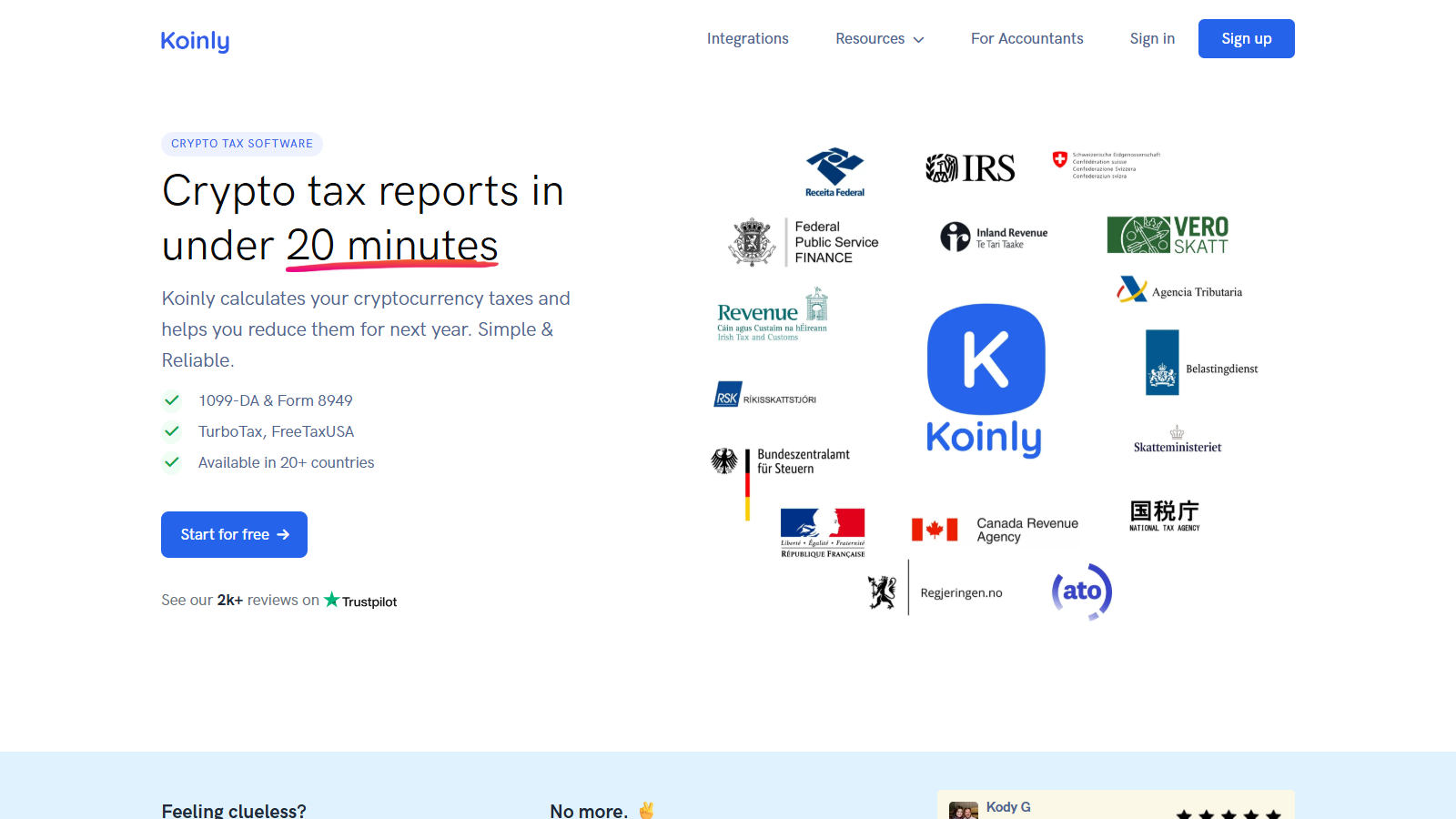
What Koinly does well: Multi-chain DeFi support (Ethereum, Solana, BNB Chain, Polygon, Base, and more), automatic LP position tracking, and staking reward recognition. The tax report output is compatible with TurboTax, TaxAct, and H&R Block, and produces a 1099-like summary for direct accountant use.
Honest limitation: Koinly’s free tier caps at 25 transactions per year, which is inadequate for most active users. The paid plan pricing is reasonable for what it delivers, but it is a real cost that some users try to avoid with workarounds that create reconciliation errors.
CoinLedger — best for US filing integration
CoinLedger (formerly CryptoTrader.Tax) has the deepest direct integration with US tax filing platforms. The one-click TurboTax import is the cleanest in the category. For US users with primarily exchange-based activity (fewer DeFi transactions), CoinLedger’s simpler interface reduces the setup friction compared to more DeFi-capable tools.
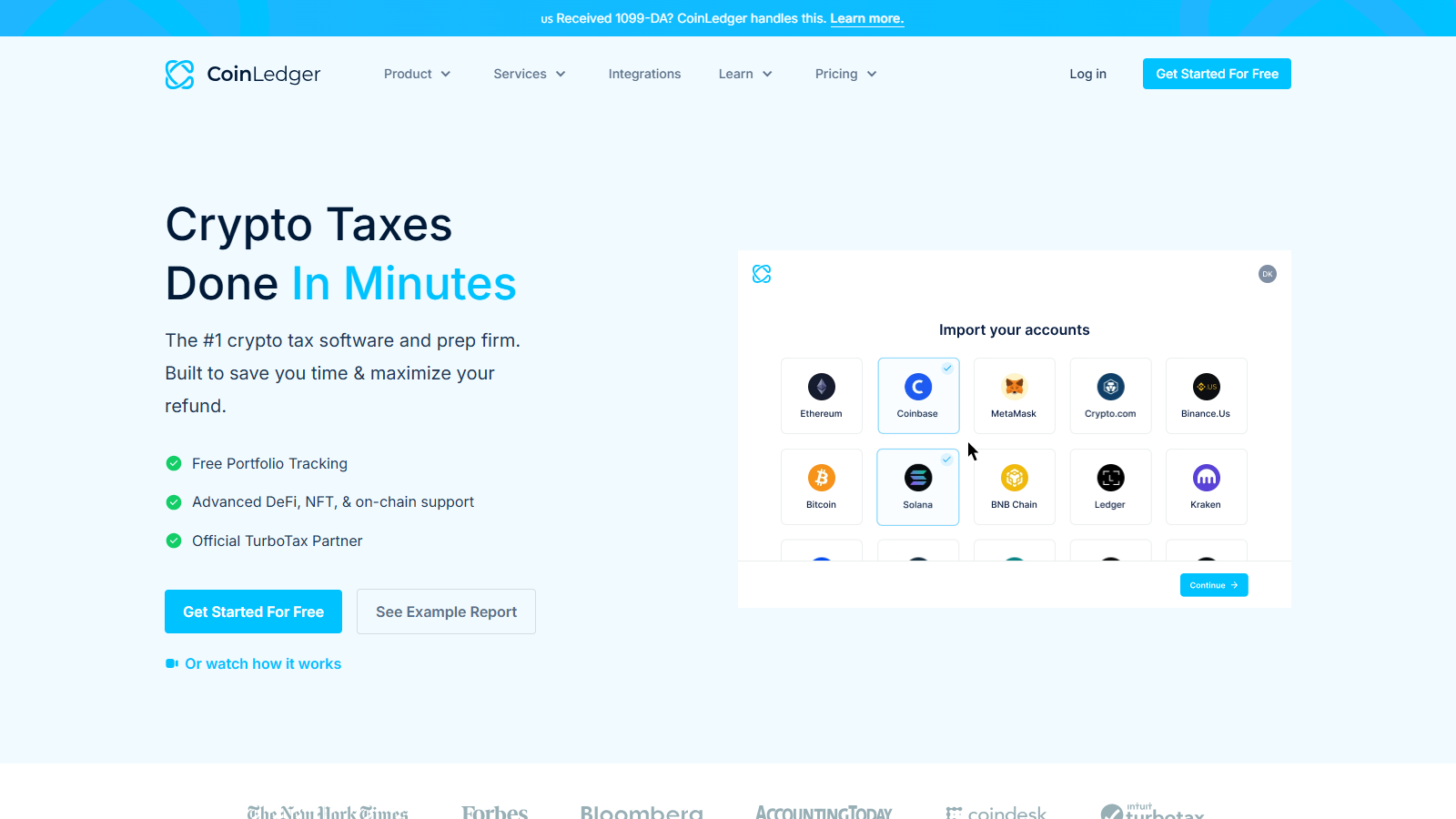
What CoinLedger does well: US tax form generation (Form 8949, Schedule D), direct TurboTax and TaxAct import, and 1099-DA reconciliation against exchange-issued forms. The unlimited transaction tracking in the free tier is a genuine differentiator — you can see your full portfolio without paying until you want the tax report.
Honest limitation: DeFi and NFT support is less comprehensive than Koinly or TokenTax. Users with complex DeFi histories (multiple protocols, LP positions, yield farming) will find more gaps in automatic import coverage.
TokenTax — best for complex DeFi
TokenTax is the choice for high-volume or DeFi-heavy users who cannot afford reconciliation gaps. The manual transaction upload tools and direct API access give power users more control over how transactions are categorized. The TaxBit partnership provides direct CPA access for users who want professional review alongside the software.
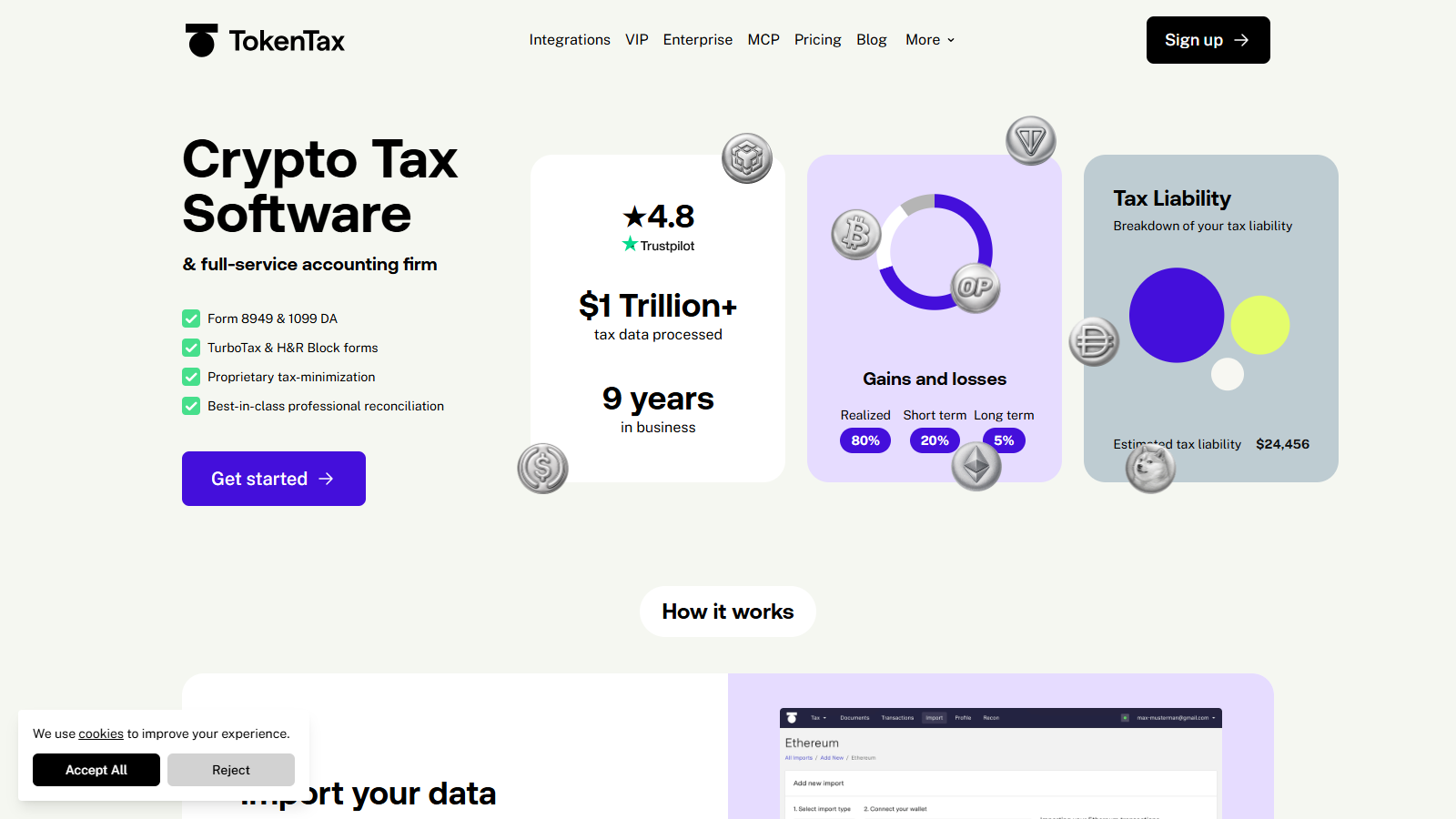
What TokenTax does well: Handles edge cases that break other tools — LP exit events, protocol migrations, airdrops from non-standard contracts, cross-chain bridge transactions. The customer support quality for complex issues is higher than most competitors.
Honest limitation: No free tier and higher starting price. The interface is more technical than Koinly or CoinLedger.
TaxBit — best for enterprise tax compliance
TaxBit is fundamentally different from the consumer-facing trackers above. Its current platform is designed for exchanges, wallets, payment companies, and other digital-asset businesses that need to collect customer tax documentation, calculate cost basis, determine which accounts are reportable, and file information returns across multiple jurisdictions. It is not the most practical choice for an individual who simply wants to import personal wallets and generate a year-end capital-gains report.
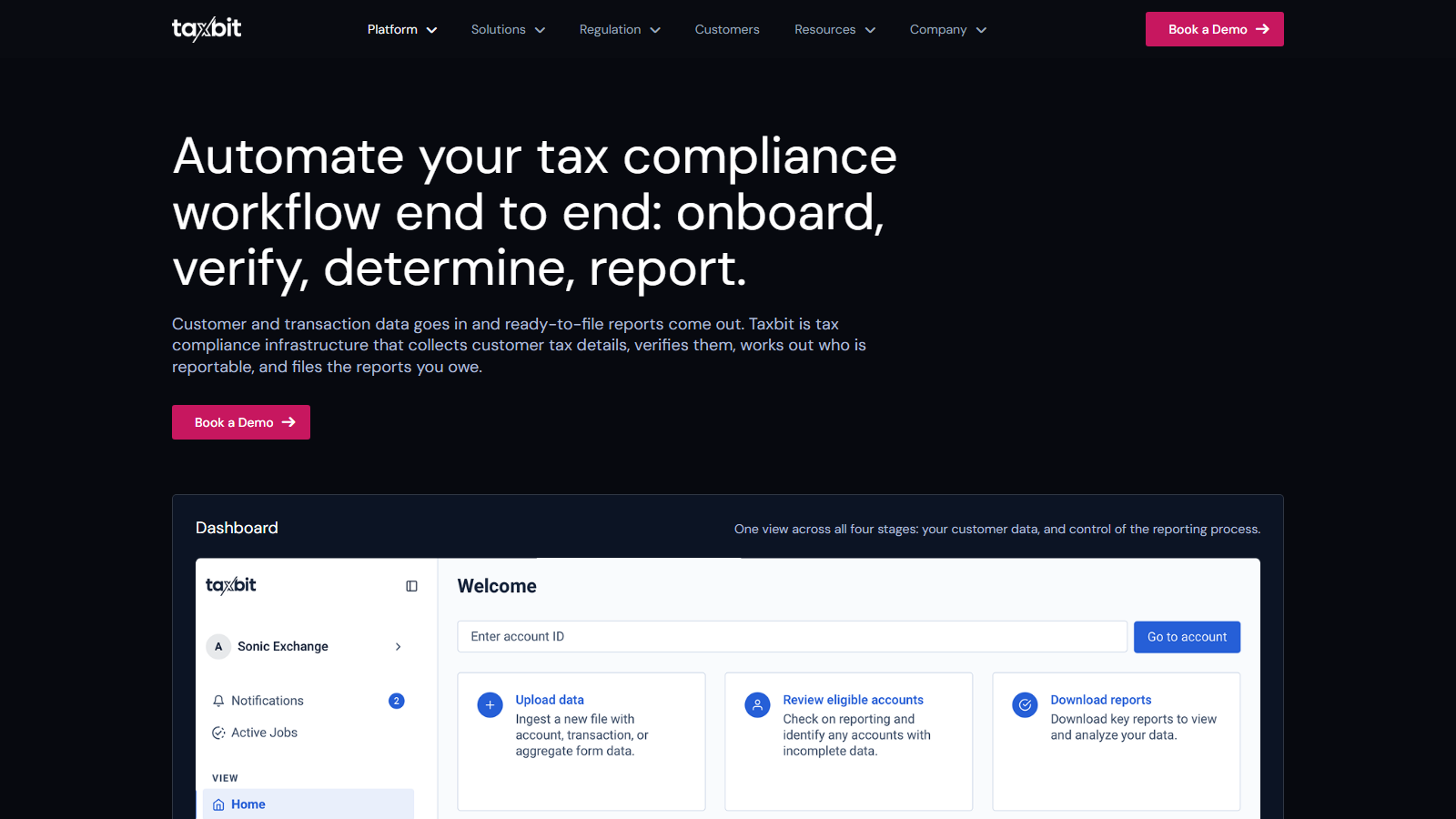
What TaxBit does well: The platform combines W-9 and W-8 collection, real-time TIN matching, transaction-level cost-basis records, and reporting workflows for Form 1099-DA, the wider 1099 series, CARF, DAC8, and CRS 2.0. TaxBit states that its infrastructure supports more than 70 reporting jurisdictions and preserves an audit trail connecting each calculated gain or loss to the underlying transactions. That makes it relevant to platforms preparing reports for large customer bases rather than retail investors preparing a single return.
Honest limitation: TaxBit does not publish a self-service retail plan comparable to Koinly, CoinLedger, or CoinTracking. Pricing is customized for enterprise deployments, and implementation requires business data pipelines, reporting-scope decisions, and compliance review. Individual users should therefore treat TaxBit as infrastructure their exchange may use behind the scenes, not as the default personal portfolio tracker in this comparison.
CoinTracking — best for power users and multi-country reporting
CoinTracking combines a real-time portfolio tracker with detailed transaction analysis and country-specific tax reporting. It supports API, blockchain-address, and CSV imports from more than 400 exchanges and wallets, then categorizes trading, DeFi, staking, NFT, and margin activity. Its breadth makes it particularly useful for long-running portfolios spread across many accounts or for users who need more granular reporting than a streamlined filing app provides.
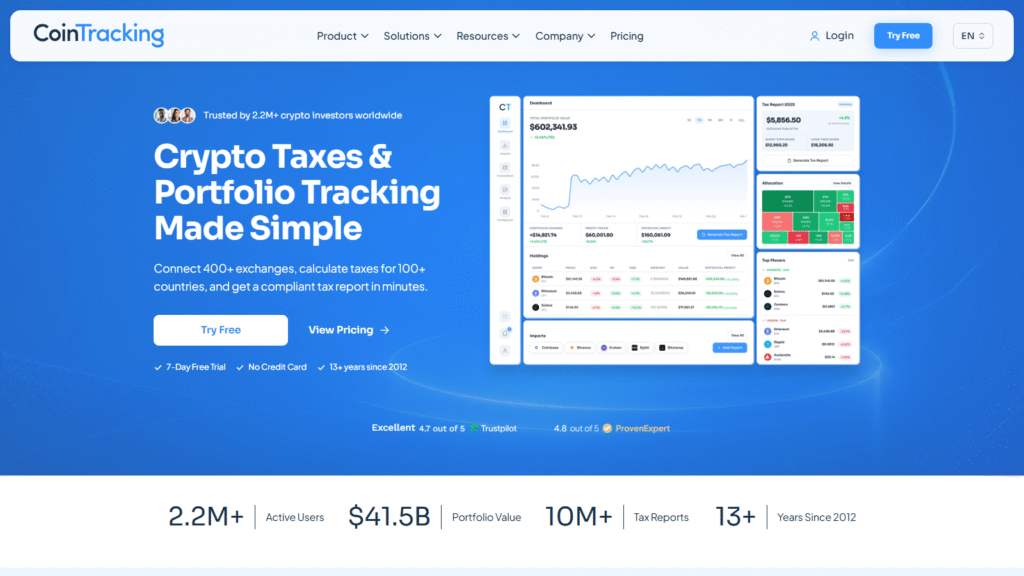
What CoinTracking does well: The platform offers more than 25 portfolio and tax reports, multiple cost-basis methods, and tax outputs for more than 100 countries, including IRS Form 8949 and Schedule D for US filers. One subscription covers every tax year, which is useful when reconstructing older transaction histories. The Starter plan costs $49 per year for up to 200 transactions, while the Pro plan adds automatic synchronization and API access for up to 3,500 transactions.
Honest limitation: CoinTracking’s free plan is primarily a portfolio view and does not include tax reports or continued transaction imports after the trial. Users who need automatic API synchronization must move to the $169-per-year Pro tier, and large or highly active histories require more expensive plans. Its depth is valuable for power users, but casual investors may find the reporting options more extensive than they need.
Free options worth using alongside paid tools
Etherscan/Solscan wallet history export: Free on-chain transaction export for building a manual record. Not a tax calculator, but useful for auditing what a paid tool imported.
Coinbase, Kraken, and Binance built-in tax tools: Major exchanges have basic tax report generators that cover exchange activity only. Adequate for users who only traded on one exchange with no DeFi activity.
Rotki: Open-source, self-hosted portfolio tracker with good privacy properties. Requires technical setup. Free but time-intensive.
FAQ
Does my crypto exchange automatically report my taxes to the IRS?
Yes, as of 2026. US exchanges issue Form 1099-DA for assets purchased on their platform on or after January 1, 2026. The IRS receives a copy. Failing to report crypto income consistent with 1099-DA is increasingly high-risk.
What is wallet-by-wallet accounting?
The IRS now requires cost basis to be tracked per wallet rather than aggregated across all wallets. Transfers between your own wallets do not create taxable events, but you must document the original cost basis moving with the transferred assets.
Can I use a free tool for my crypto taxes?
For simple situations (one exchange, primarily spot trading, no DeFi), exchange-native tax tools may be sufficient. For anything involving multiple exchanges, on-chain wallets, DeFi, or staking, a paid tracker is worth the cost relative to the manual reconciliation time it saves.
Disclaimer: This article is for informational purposes only and does not constitute financial or investment advice. Cryptocurrency and digital asset markets carry significant risk. Always do your own research before making decisions.